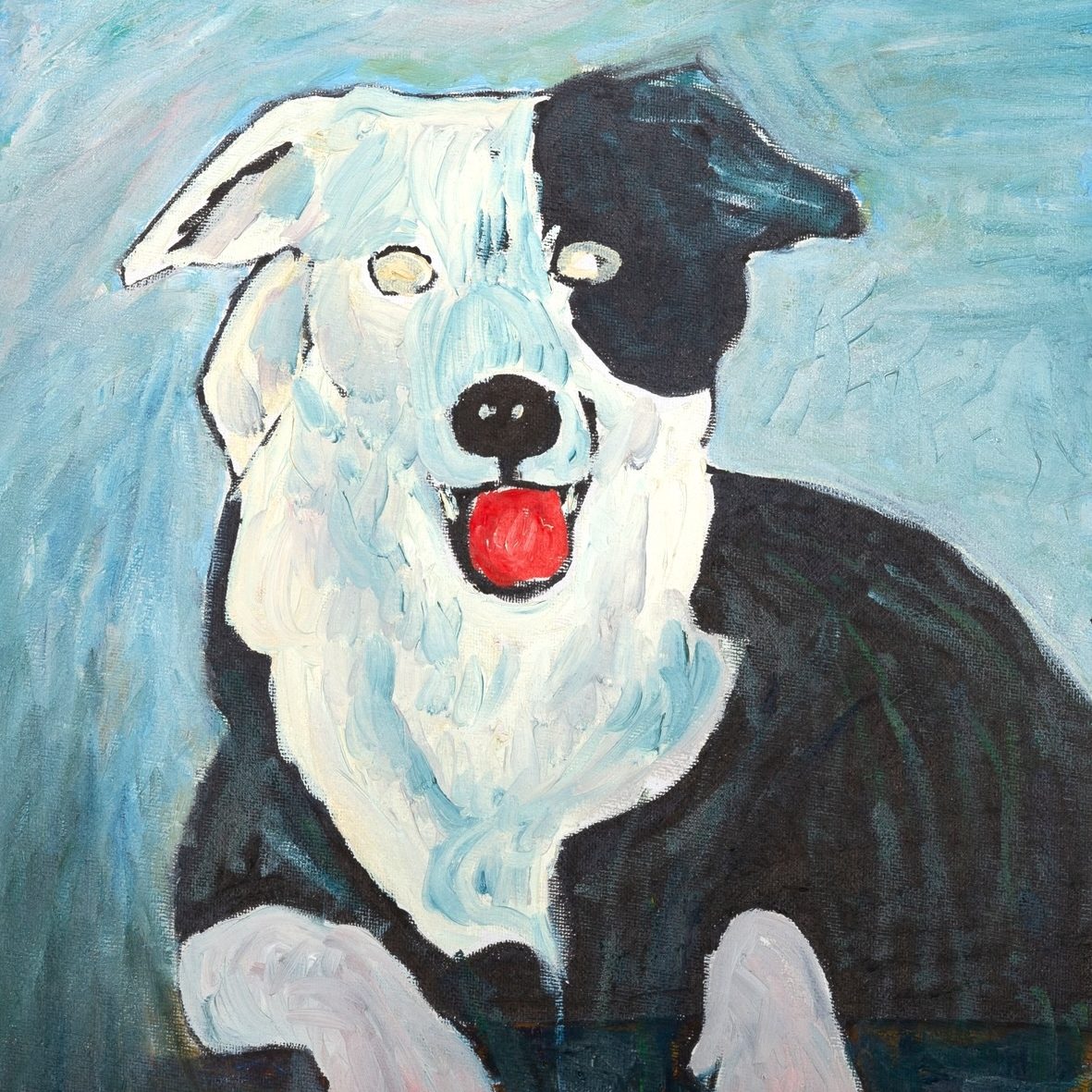
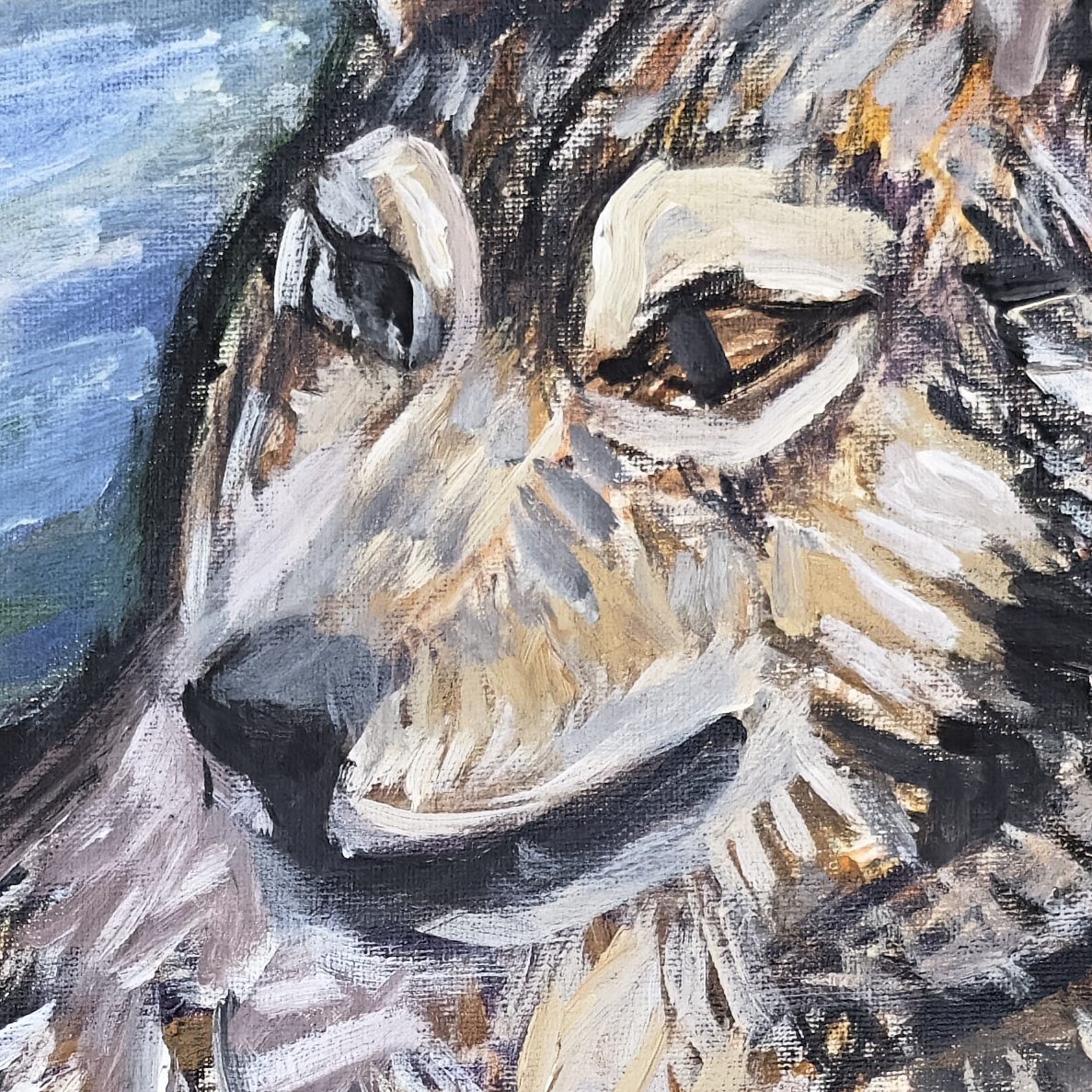
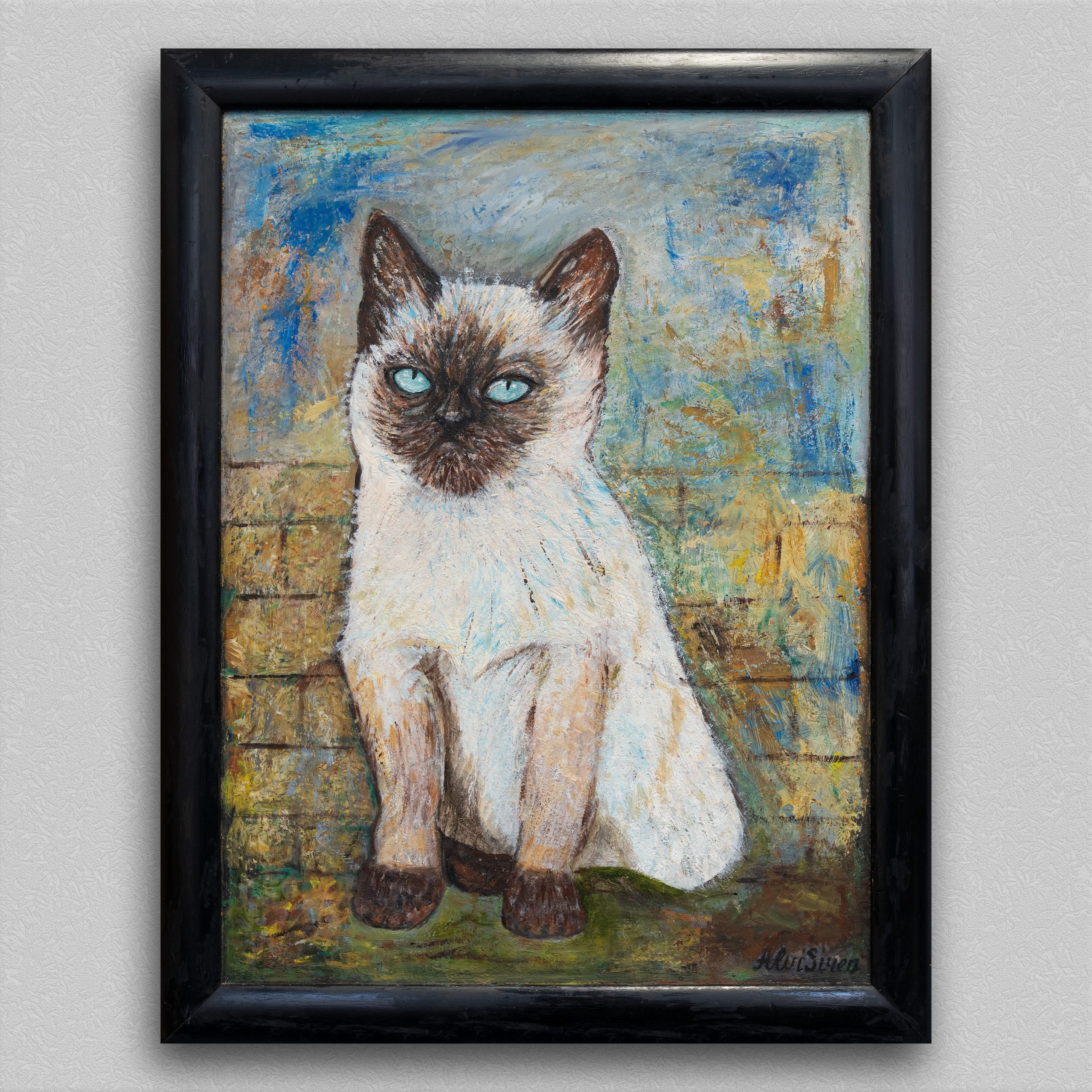
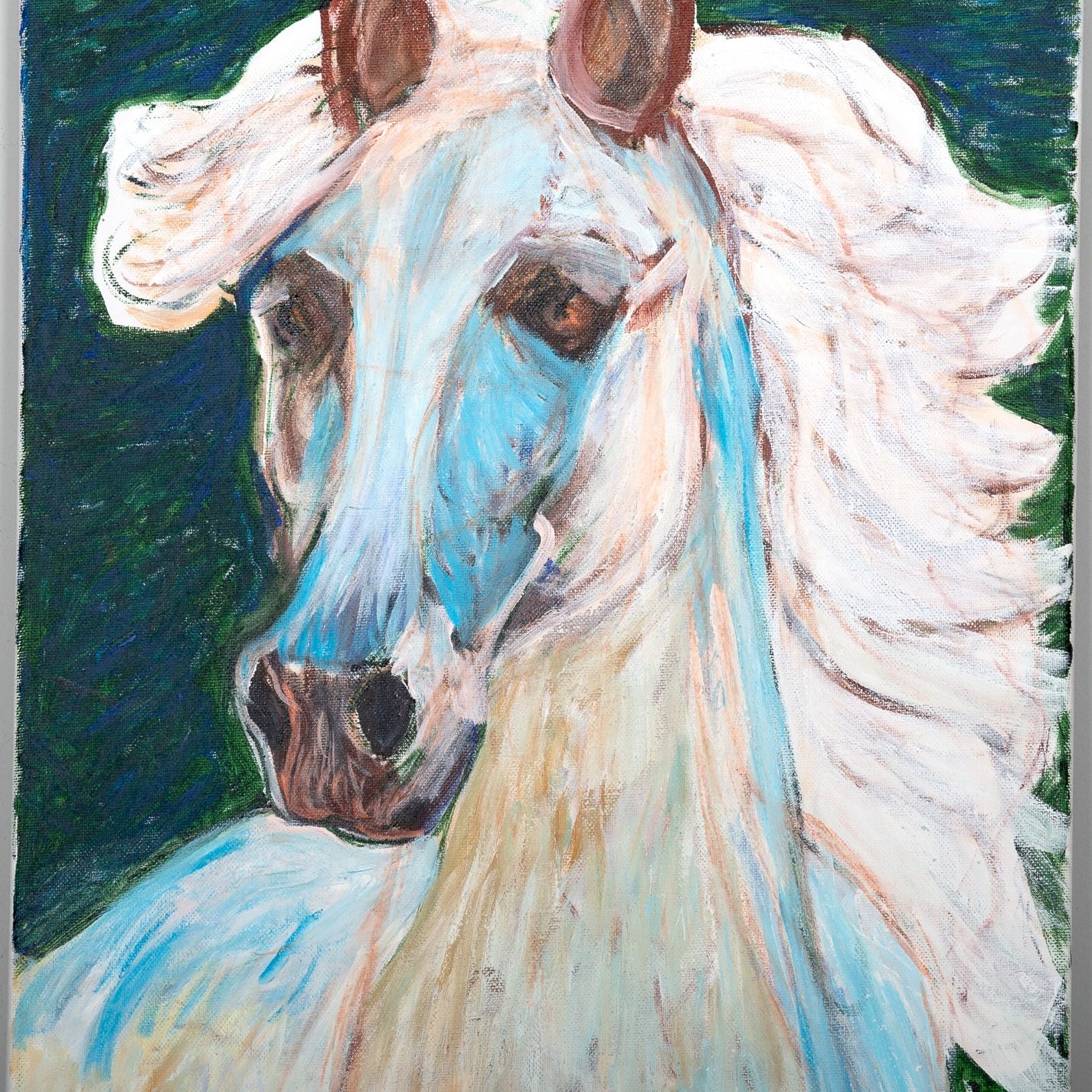
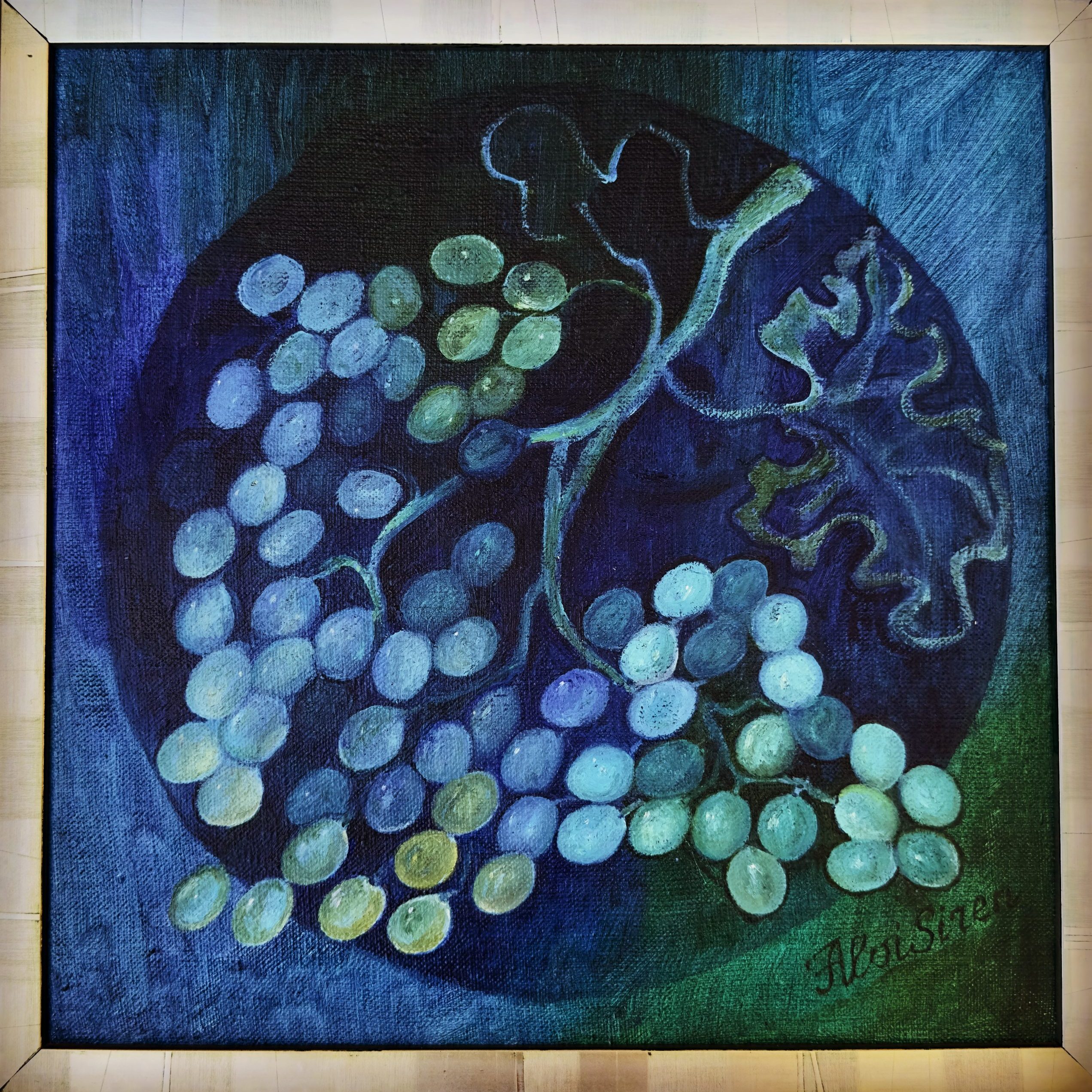
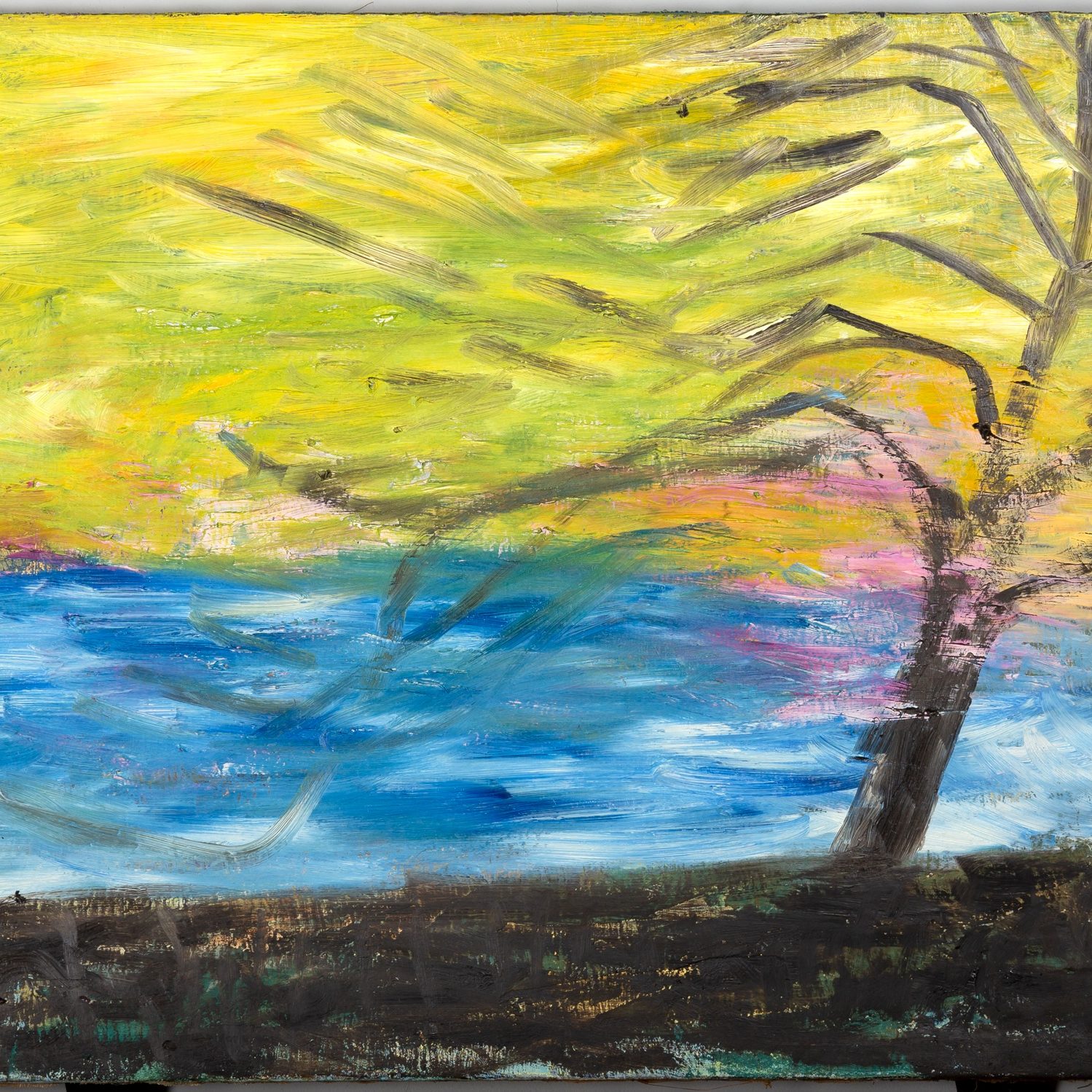
Loyal Heart
Painting by Alvi Siren

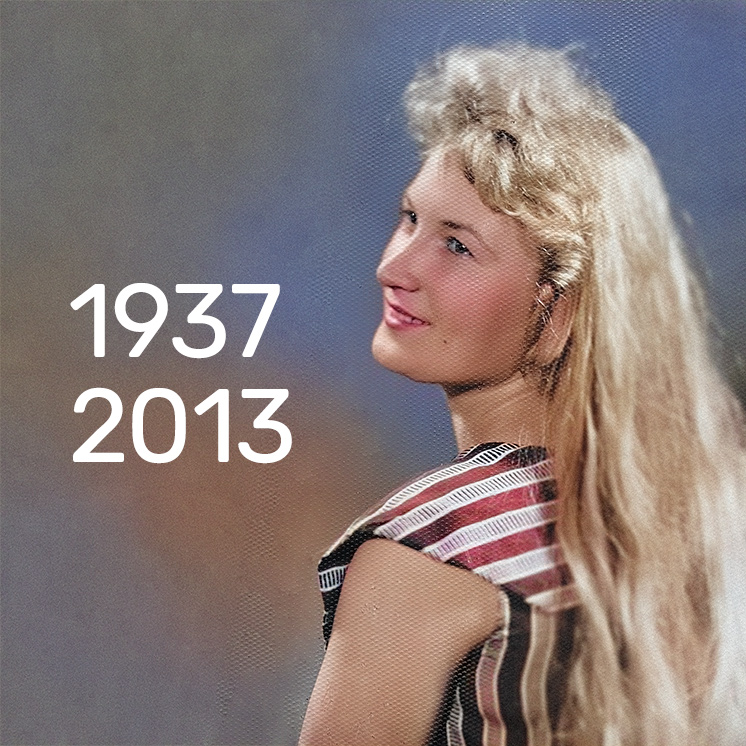
Alvi Siren (née Alvina Sirenko, 1937-2013), born on 12 December 1937 in the village of Tahamlyk, near Poltava, Ukraine, was a Ukrainian painter whose life and work were defined by an enduring devotion to artistic expression and a remarkable spirit of perseverance.
From an early age, Alvi displayed a natural sensitivity to colour, form, and the expressive possibilities of drawing and painting. Art was never merely a profession for her; it became a lifelong calling, a source of reflection, and a means of engaging with the world around her. Throughout her life, painting remained a constant presence, sustaining her through periods of hardship, responsibility, illness, and personal change.
Born shortly before the outbreak of the Second World War, Alvi experienced the devastation of war at a very young age. Her village in the Poltava region was caught in the violence of the German occupation, and the experiences of those years left a profound impression on her. She witnessed destruction, hunger, fear, and personal loss, including the death of her mother during the occupation. Memories of survival, of forests, wild plants, mushrooms, and the fragile resources of nature, remained with her throughout her life. In later years, these early experiences would find subtle echoes in her art, particularly in her recurring depictions of flowers, landscapes, still life subjects, and mushrooms.
Despite the difficulties of her childhood, Alvi pursued education and creative development with determination. In 1959, she graduated from Kharkiv State University and began her professional career as a teacher. In 1963, after marrying, she relocated to Tallinn, Estonia, where she continued to nurture her artistic ambitions while raising a family.
In 1973, nine years after the birth of her daughter, she enrolled at the Estonian Academy of Arts, where she studied under the distinguished Estonian artist Mart Bormeister. Although family circumstances prevented her from completing her formal studies, the experience proved formative in her artistic development. From 1974, she worked as a scene painter and decorator for several theatrical organisations in Tallinn, refining her understanding of composition, atmosphere, colour, and decorative design – qualities that would later become characteristic of her independent work.
From 1985 onward, Alvi Siren worked as a freelance artist. During this period, while raising her son as a single mother following the breakdown of her marriage, she produced a rich and diverse body of work encompassing landscapes, floral compositions, still lifes, decorative paintings, genre scenes, and abstraction. Her paintings are distinguished by their balance, sensitivity to colour, and intimate connection to the natural world. Whether working from observation, memory, or imagination, she approached her subjects with a quiet attentiveness that became a defining feature of her artistic language.
Throughout her career, Alvi explored a wide range of styles and techniques. Her earlier works were created primarily in oil, a medium through which she established her foundational painterly approach. Over time, her practice evolved, and in later years she increasingly embraced acrylic paint for its immediacy and versatility. Some of her final works combine both media, with compositions developed in oil and completed with acrylic accents, reflecting her continued experimentation and technical refinement.
Art remained a source of healing, purpose, and renewal throughout her life. Even during periods marked by depression, illness, and personal struggle, she returned to the studio with unwavering dedication. Painting allowed her to transform memory into image, hardship into reflection, and everyday subjects into moments of beauty and contemplation.
After a long battle with cancer, Alvi Siren passed away in Estonia in 2013. She continued creating until the final years of her life, which became among her most productive. Today, her works are held in private collections in the United Kingdom, Germany, France, Italy, the United States, Estonia, and elsewhere.
Alvi Siren left behind a rich and deeply personal artistic legacy – a body of work shaped by resilience, observation, and a profound connection to nature. Through decades of dedication, she transformed personal experience into paintings that continue to resonate through their warmth, sincerity, and enduring celebration of beauty.